Why Civilization Can’t Be Sent
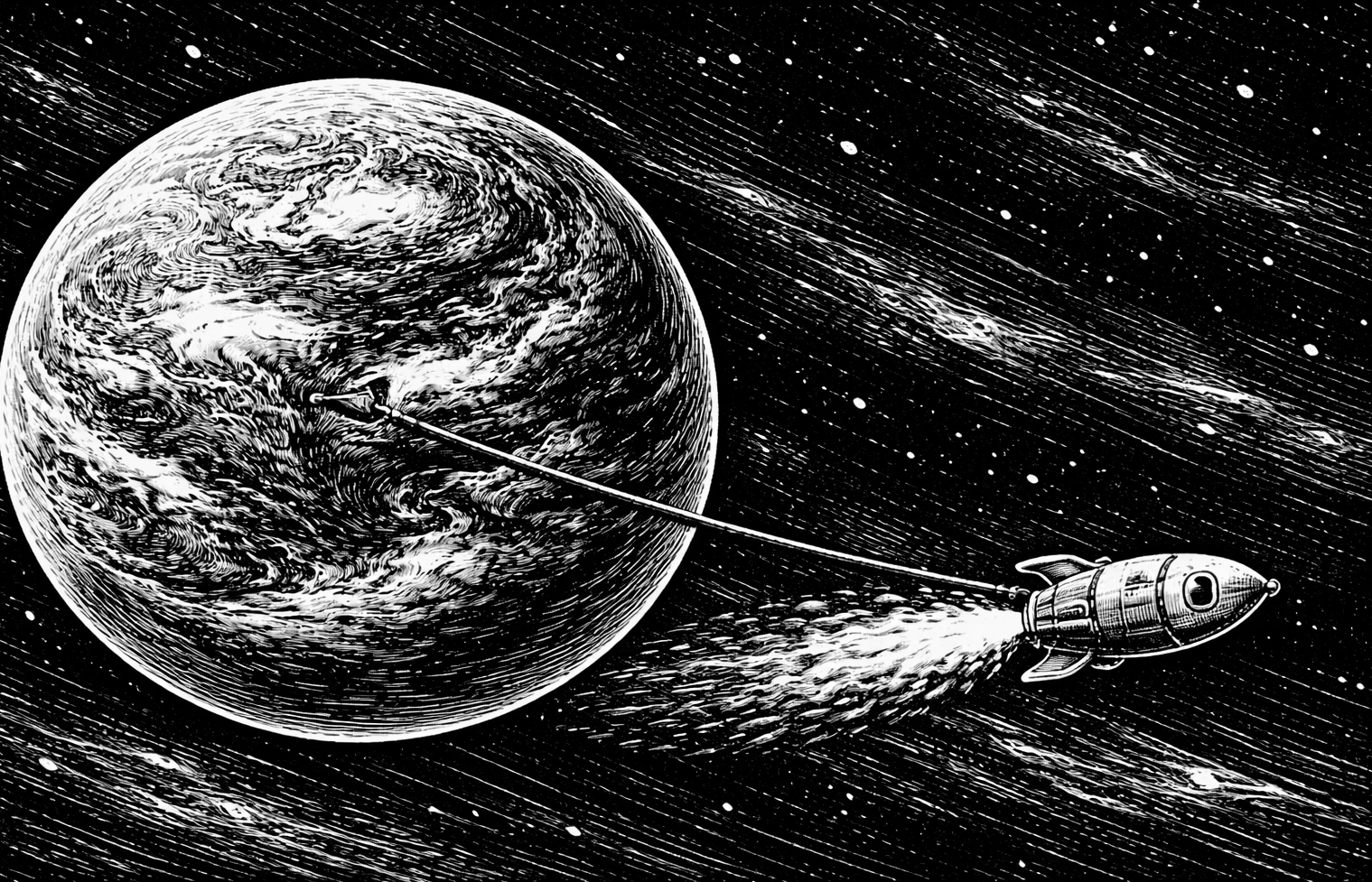
When we think about the future, we usually imagine a giant hand-off. We picture people in the future receiving our “package” of knowledge. We build massive libraries, save digital records, and launch messages into deep space because we want our civilization to arrive somewhere else, or sometime later, and keep going. This feels like the right way to think about it, but it is actually a mistake.
Civilization cannot be passed forward like a gift or a package. It does not work across thousands of years or across the vast gaps between stars. The reason is not that our technology is too weak or that storage fails. The real reason is that meaning depends on the world around it. When the world changes enough, meaning collapses.
We can see this clearly in our own history. We find ancient books from lost empires, but the world that made those books make sense is gone. We find huge stone monuments, but we don’t really know what they were for. We still have old laws on the books even though the problems they were meant to solve no longer exist. A physical object can survive into the future perfectly intact and still mean almost nothing to the person who finds it.
Civilization is not a collection of things. It is a pattern of how people work together, make decisions, and understand the world. That pattern only exists because of the pressure people feel in their daily lives. Take away that pressure, and the pattern falls apart. Even if the artifacts remain, the civilization itself is gone.
This is why trying to “send” civilization is the wrong goal. It is also why we don’t need to panic about things being lost. When civilization fails to move forward intact, it doesn’t simply die. It reappears, not as a copy of the past, but as a convergence on similar ideas.
Throughout history, groups of people who never met each other ended up inventing similar things. In South America, Egypt, and China, people all developed writing. They all moved from keeping everything in their heads to keeping records on stone or paper. They all built cities and organized their lives in comparable ways. These groups didn’t copy one another; they arrived at similar solutions because they were under similar pressure.
As societies grow, certain problems stop being optional. There is too much information for one person to remember, so writing appears. It becomes too hard for everyone to simply “get along,” so laws appear. Under these conditions, the same kinds of solutions keep showing up. Not because people were taught an old method, but because those methods fit the situation they were facing.
Civilization stays alive because the world keeps forcing people to make sense of the same kinds of challenges. This becomes especially clear when we think about the scale of the universe. If we tried to send our civilization to another galaxy, there would be no shared language, no shared biology, and no shared timeline. Nothing we tried to hand down would make sense.
This is not just a human problem. Any civilization, no matter how advanced, would face the same collapse of meaning across enough distance and time. At that scale, you cannot depend on what you carry with you. You can only depend on what can be found again.
In a galaxy, nothing survives by being moved from one place to another. Only the things that can be rediscovered will last. Once you see this, the whole problem changes. We should worry less about delivery and more about recognition. Different civilizations don’t need the same books or the same history; they only need to reach similar insights on their own and recognize them as making sense under the pressure they feel.
The things that last the longest are the things that can be simplified without losing their core. These are not like history books; they are more like signals. They don’t explain everything, but they give just enough shape for a new mind to arrive at a similar understanding. This does not happen because of instructions or lectures, but because a mind becomes ready for it.
We see this in school all the time. A book means one thing to you when you are ten and something completely different when you are twenty. The book didn’t change, but you did. Your mind became able to reach a deeper meaning on its own.
This kind of reaching does not happen when you are straining or performing or trying to get the “right answer.” It happens in reverie, those quiet moments when you are resting, playing, or letting your thoughts wander. When your mind is not busy defending itself or trying to win, it starts to connect things on its own.
That is why math keeps being discovered again and again. It is why different cultures often arrive at similar ideas about fairness and right and wrong. These ideas are not passed along like secrets; they are reached for by minds that are quiet enough to notice them.
There is a hidden cycle at work. In reverie, people can reach the same ideas again without knowing anyone reached them before. That happens because the world keeps presenting the same kinds of pressures, and there are only a few ways of making sense that hold together. No one starts from nothing, and no one gets a perfect manual. We reach for coherence within the landscape we’re living in, sometimes finding what others found, and sometimes what they missed.
This is why civilization reappears without ever being something that can be sent.