The Skills College Doesn’t Teach That AI Can’t Replace
Why Touching Metal Is No Longer Optional
If you go to college and spend four years mostly reading, listening, and repeating what a professor already knows, you are walking into a trap that did not exist for previous generations.
AI can read every relevant book ever written, retain all of it, connect ideas instantly, and assemble insights faster than any human ever will. That advantage is permanent. It will only grow.
This does not mean college is pointless. It means the default version of college, the one built around passive learning and delayed contact with the real world, is now dangerous.
Going into debt, reading what machines can process far better than you can, drifting through classes, partying as if the calendar still says 1995, and assuming the world will need you on the other side is no longer a harmless rite of passage. It is a gamble taken at exactly the moment the odds have turned against you.
By 2030, the world will not be short on people who have read books, attended lectures, and collected credentials. It will be saturated with them. What it will not need are graduates who have never been required to make something work when conditions are messy, constrained, or unforgiving.
A student who treats college as a place to absorb information the traditional way risks graduating with credentials but without the ability to take an idea and make it work when things push back. Learning itself has not lost value. Learning that never leaves the classroom largely has.
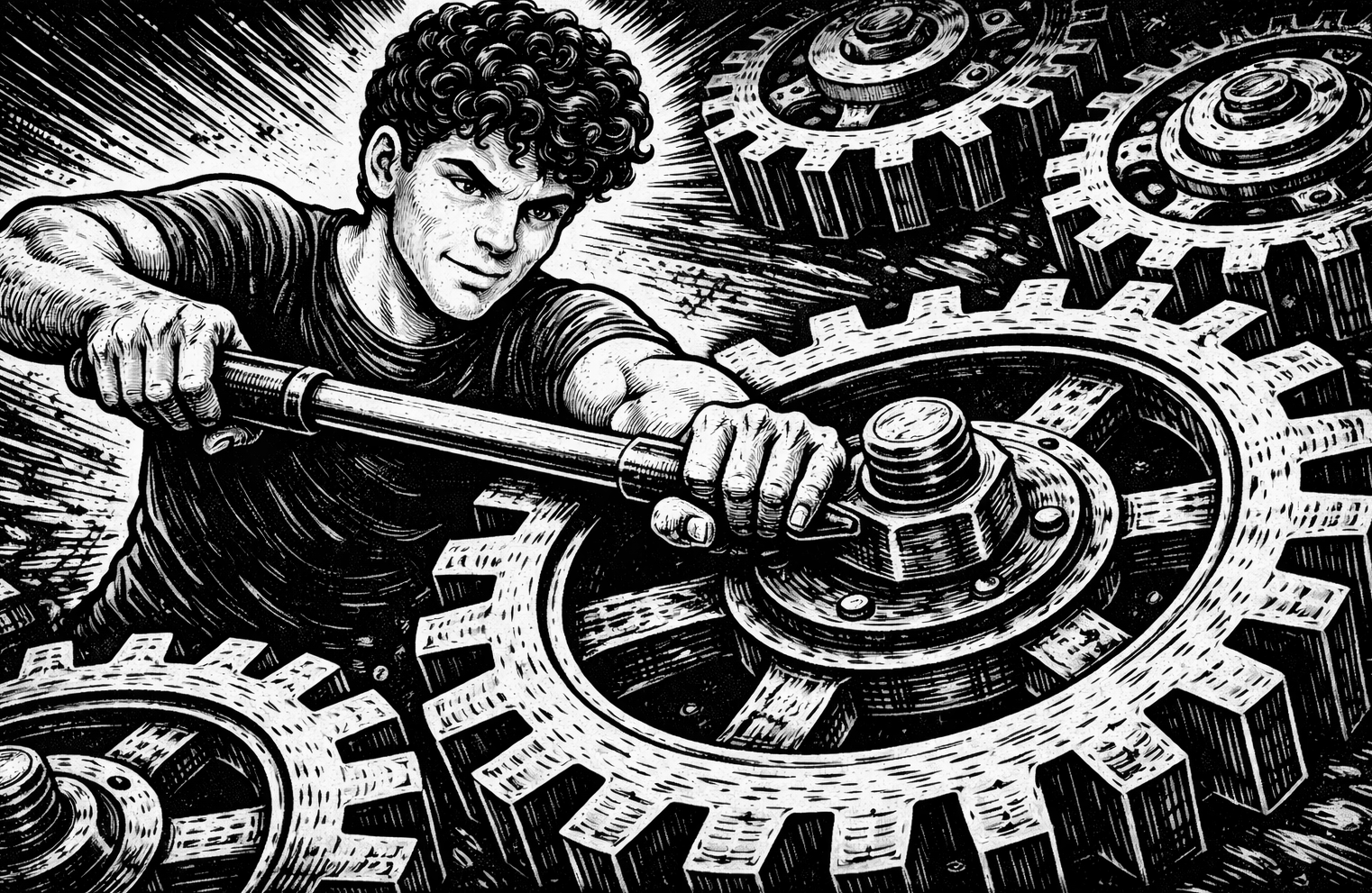
If you want a different outcome, touching metal cannot be optional.
Metal is not an idea. It is the work itself.
It is tightening a bolt until it finally moves or snaps. It is cutting steel and discovering the tolerance on paper does not match the tolerance in your hands. It is aligning a laser that drifts because the surface is not flat. It is wiring something that should work and does not, because heat, vibration, dirt, and noise were never part of the diagram.
It is also the unruly classroom, the patient who will not stabilize, or the code that breaks only during the live demo.
It is working on systems that leak, corrode, fatigue, and wear out. It is tools that slip. Parts that arrive late. Measurements that are almost right. Materials that behave differently after years of use. It is schedules that look clean until weather, people, and supply chains collide.
Touching metal means being there when things grind, stall, bind, crack, shear, or fail. It means knowing when more force will solve the problem and when more force will make it worse. It means recognizing when to stop, when to wait, when to change tools, and when to walk away before something breaks that cannot be replaced.
You learn this with your hands, your ears, your eyes, and your nerves. You hear a machine change pitch under strain. You feel vibration before failure. You smell heat before damage. You see fatigue in people before it shows up in metrics.
None of this lives in books. None of it shows up cleanly in models. It is learned in shops, on sites, in labs, on crews, in plants, in classrooms, and in the field, where mistakes cost time, money, skin, reputation, or trust. Over time, that experience settles into judgment.
The closer you are to metal, the harder you are to replace.
College, then, cannot be a single-track mission.
What is being proposed here is not an easier or more efficient version of college. It is a harder one by design. Studying while also working close to real systems, real tools, and real constraints will stretch you. It will take more time and more energy during those same four to six years. You will feel behind some of your peers in certain moments while they appear relaxed, social, and unburdened.
Do not mistake that appearance for safety.
A degree may still open the door. It no longer keeps you in the room. What matters now is whether you leave college able to operate when things are unclear, imperfect, and resistant.
Earn the degree, but treat it as a foundation rather than a guarantee.
At the same time, deliberately pull yourself toward environments where things can go wrong and stay there. Internships, apprenticeships, labs, crews, shops, startups, operating roles. Choose places where plans collide with reality. Choose exposure over prestige. Choose responsibility over comfort, even though it makes those years heavier.
Touch metal constantly, not once a year or only during a final project, but as often as you can. You need repeated contact with situations where ideas fail, adapt, and either survive or break. That is where relevance is forged.
When you choose your classes next fall, choose the one with the lab. When you choose your summer, choose the sweat.
Touch metal, or risk becoming unnecessary.