Four Years, Forty Years, and the AI Shock
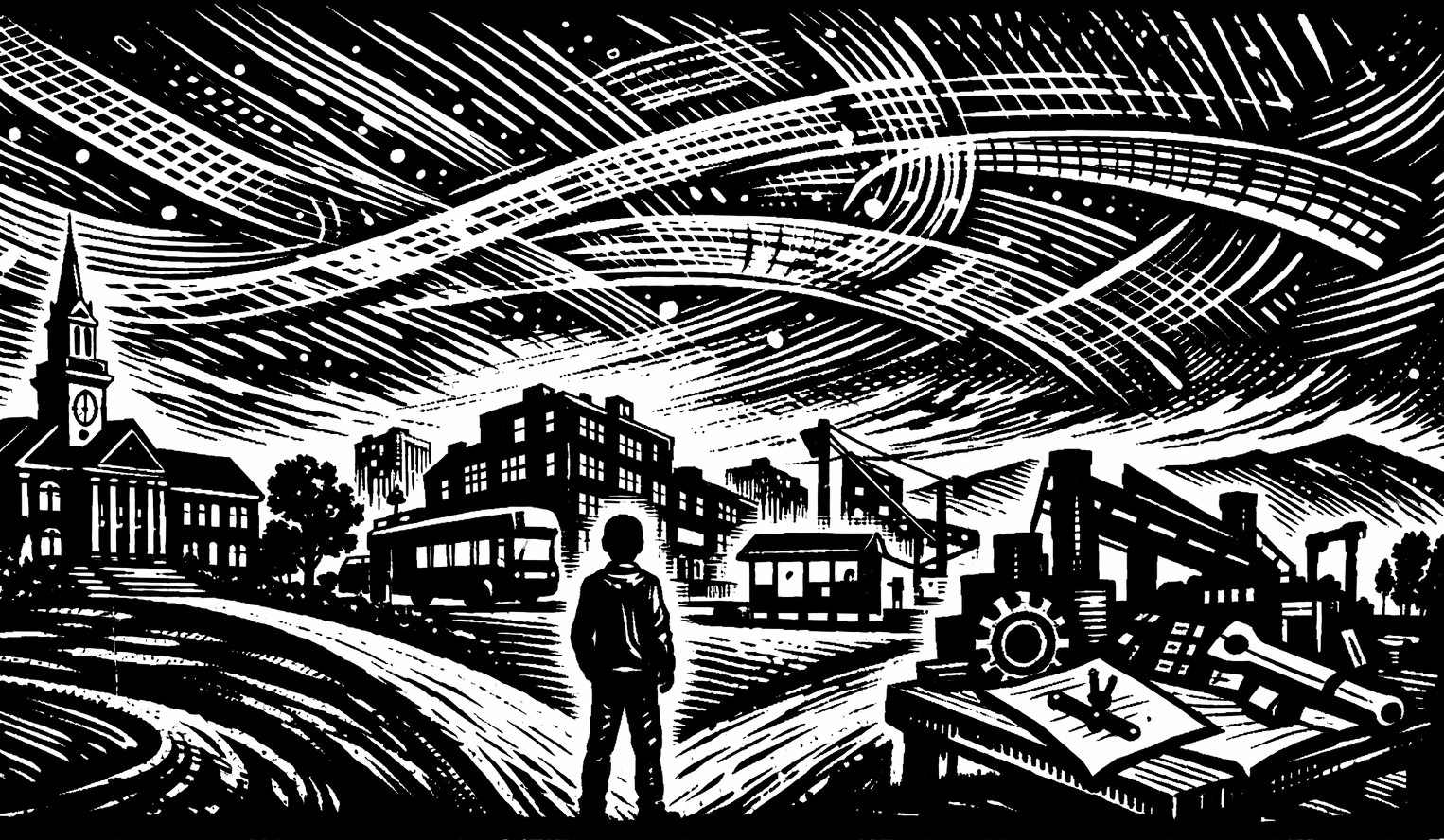
Over the last year, while helping my son Joe sort through college options and early life decisions, I wrote the posts below.
How to Choose a University in the Age of AI
Choose for the school’s learning approach, because AI has changed what “good work” looks like.
Figure out which approach the school is really using: some schools make you learn by doing the hard parts yourself; others assume AI can draft and teach you to check it, challenge it, and explain what’s true.
Ignore marketing and look for proof: clear rules for when AI is allowed and when it must be disclosed, and real discussion of AI in classes beyond computer science.
Ask one simple question: “If AI can write a good first draft, what do you grade for?” A strong school can answer clearly and consistently. A weak one cannot.
The Self-Sorting Silo
Your environment shapes you more than you expect, and college often becomes the place you stay.
Treat location as a serious decision: it affects your daily life, your habits, your health, and who you spend time with.
Assume the place will pull you in a direction, even when you are busy or tired, so choose a setting that makes good routines easy.
Choose the campus like you are choosing a region and a network, because after graduation many people keep living and working nearby.
The Skills College Doesn’t Teach That AI Can’t Replace
College still matters, but it works best when you combine it with real-world work that has real consequences.
Do not spend four years mostly consuming information and turning it into papers, because AI can already do that part fast and well.
Get close to work where things can fail: labs, shops, crews, clinics, field work, machines, hardware, and live systems.
Make sure you learn by doing: build, fix, test, measure, troubleshoot, and deliver real results, because that is where judgment grows.
Rethinking the Climb: Careers in the Age of AI and Robotics
Many careers will change shape quickly, so pick for adaptability, not just a title.
Do not assume the traditional ladder is stable, because many roles are being simplified, split apart, or replaced.
Aim for work where good decisions matter: risk, ethics, leadership, coordination, diagnosis, and solving problems when the script breaks.
Choose paths that get stronger with technology, or paths where you can use technology to become more valuable, and be honest about paths that are shrinking.
Rethinking the Climb: Education in the Age of AI
Education is no longer “finish school, then coast,” so build a way of learning that keeps working as the world changes.
Do not confuse speed with depth: reading summaries and generating answers can feel productive while you stay shallow.
Go all-in on skills that still matter when tools get powerful: ethics, clear writing and speaking, careful reading, synthesis, and thinking with other people.
Stop spending heavy time on what machines do best, and use that time to build understanding you can explain and defend.
To the Class of 2030
The goal is not to “outproduce” AI; the goal is to stay responsible and clear-headed in a fast, confusing world.
Assume the shift is bigger than “automation”: systems will increasingly plan, act, and improve with less human supervision.
Build a strong truth filter: AI can sound confident and still be wrong, so practice checking claims and spotting gaps.
Protect your decision-making: convenience will try to choose for you, one small handoff at a time, so keep choosing what matters and why.
A warning about what happens when school trains students to generate impressive-looking work with AI instead of learning how to think and decide when things get messy.
If you can get top grades by producing polished pages fast, you might be practicing performance instead of understanding. That will feel great in school and fail the first time real life does not match the template.
When something breaks at work, the useful person is the one who can explain what is happening, choose a direction, and own the outcome, not the one who can produce another confident memo.
Use AI, but keep your hands on the wheel: know what you think before you ask, pressure-test the answer, and learn the subject deeply enough to spot when a fluent response is empty.
Final Thought
Choose your school, your location, and your early work so they build strong judgment. Pick environments that make good habits easier. Pick work that touches reality. Use AI as a tool, not as a replacement for becoming someone reliable.