Tomorrow Remembers
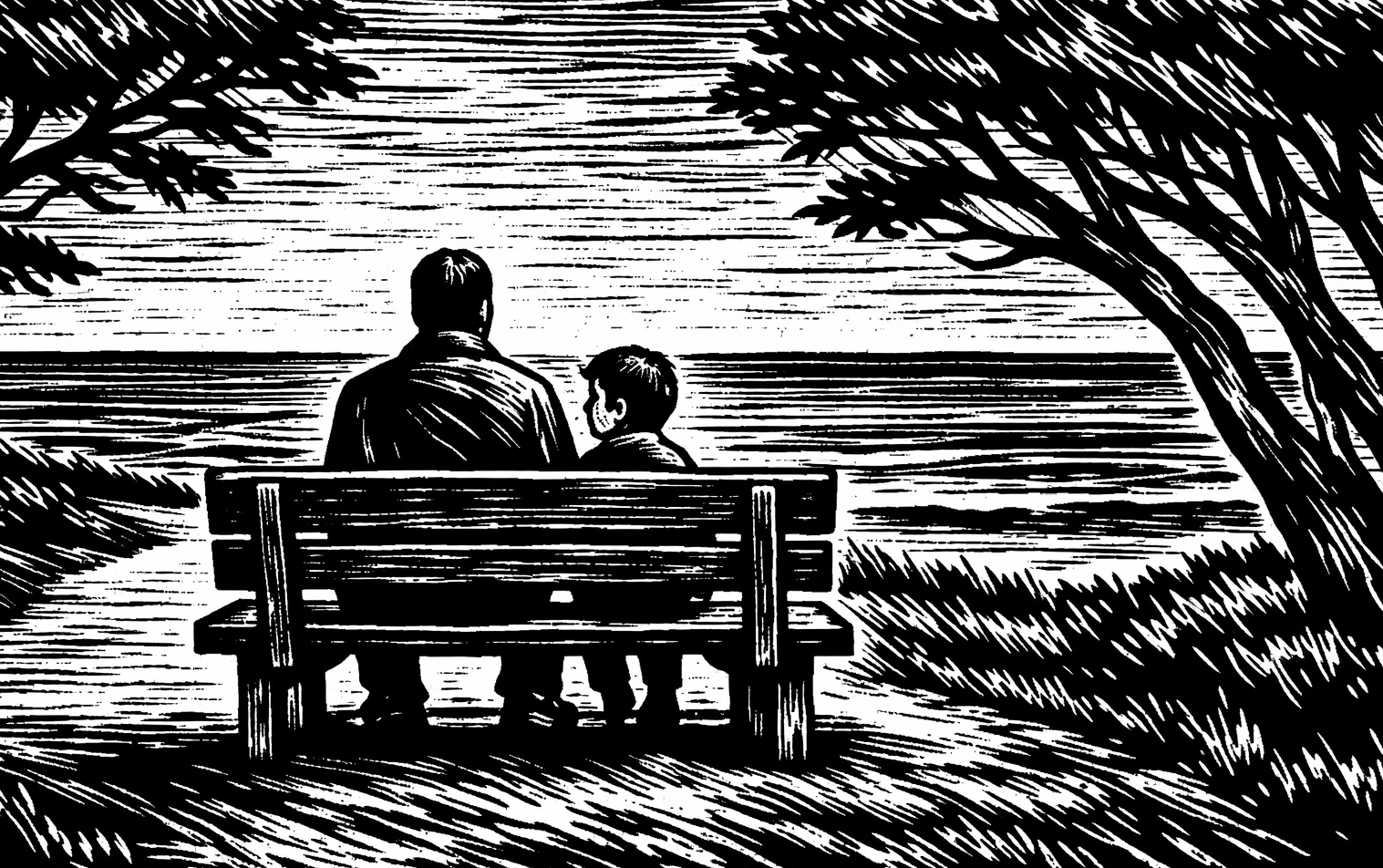
My life is not impressive in the way the internet rewards. I’m not going to hand you a hack. I’m not going to pretend I discovered a secret. I mostly just made a handful of big commitments and then kept showing up after the novelty wore off.
Somehow I arrived here, maybe on purpose, maybe not, but I’m content, I’m happy, and I’m deeply thankful.
How did I get here?
How can I help my children get to the same place?
What’s the math, the equation, the formula, the framework?
I chose a life partner and stayed. I had children.
I chose a vocation. I committed to a place.
I adopted a set of beliefs about faith and right and wrong, and I let them guide me. I chose a constrained lifestyle and fewer possessions.
I took responsibility for others. I kept a small, enduring circle. I committed to daily practices.
That’s what I did.
I didn’t do those things because I was chasing happiness. I did them because they were the shape of the life in front of me. And if I’m honest, some of them felt like loss at the time. Doors closing. Other lives I wouldn’t live. Other versions of me that would never exist.
But then time did what time does.
The days stopped feeling like a constant negotiation. I stopped waking up to a thousand tiny choices, each one asking to be optimized. My life got narrower, yes, but it also got fuller. The same dinner could carry ten things at once. Food, laughter, teaching, repair, history, belonging. The same work could carry provision, craft, pride, responsibility, and a long memory of effort. The same people could carry love, friction, forgiveness, humor, and the steady feeling that I’m not starting over every morning.
Somewhere along the way, I crossed into a kind of quiet steadiness. Not the absence of trouble. Not ease. Just a sense that my life hangs together. That the parts reinforce each other instead of pulling apart.
And that’s why this isn’t really a post about “how to be happy.” It’s a post about how a life becomes inhabitable.
Because I think a lot of people assume happiness comes from adding things. More freedom. More options. More experiences. More self-discovery. And sure, those can be good. But the kind of contentment I’m talking about didn’t come from expansion. It came from choosing a few things and staying.
As a father of four, this is the greatest wish for my children: not that they keep every door open, not that they never make a mistake, not that they live some perfectly curated life. I want them to arrive in a place where their days feel like they belong to them. Where they aren’t constantly auditioning, comparing, rethinking, restarting. Where they can look around and say, without needing to convince anyone, “I’m content. I’m happy. I’m thankful.”
So yes, I still like the idea of a framework. I’m wired that way. I want the equation. I want to be able to point at something and say, this is why.
But when I’m really honest, the equation is less about technique and more about weight.
Pick a few things worth carrying.
Carry them for a long time.
Let them change you.
Let them narrow you.
Let them make you reliable.
Let them make your life less shiny, more solid.
That’s the shoreline I keep finding when I look down into my own happiness.
And if I can give my kids anything, it’s not advice that sounds like advice. It’s a picture of a life that feels settled from the inside, and the courage to believe that closing some doors is not a tragedy. It might be the beginning of their peace.
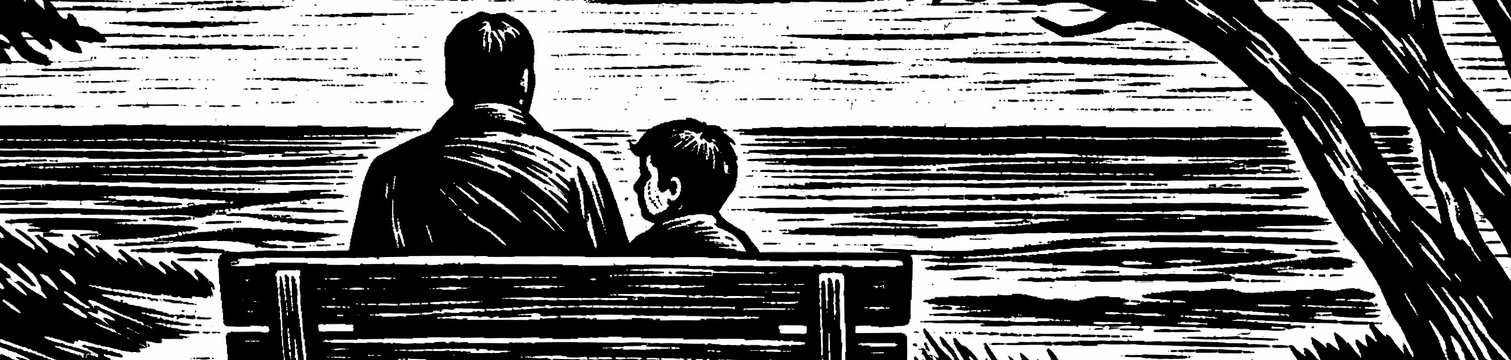
They sat on a bench by the shore, watching people move along the path.
“You don’t look bored.”
A shrug. “I’m not.”
The boy watched him for a moment. “You’re not even doing anything.”
“I know.”
“Don’t you want to be somewhere else?”
“No.”
That made the boy turn. “How can you not?”
“I stopped checking the map, killed the engine, dropped anchor, and said, ‘This is it.’”
The boy leaned in. “So you just shut it off?”
“Yes.”
“Why would you do that?”
“Because I wanted the days to start counting.”
“Counting how?”
“Like choosing one person and building a family with her.”
“You mean getting married?”
“Yes. And having kids.”
The boy’s eyes widened. “You can’t take that back.”
“No,” he said. “You can’t.”
The boy thought about it. “So you’re really in.”
“Yes.”
“What else did you shut off?”
“I picked work that takes a long time to get good at.”
“So you don’t quit when it gets boring?”
A nod. “That’s how you get good.”
“What else?”
“I stayed in one place. Same town. Same people.”
“Wouldn’t it be more fun to move around?”
“Sometimes,” he said. “But if you keep moving, nothing really feels like yours.”
The boy kicked the dirt. “So you didn’t keep switching stuff.”
“That’s one way to say it.”
“Did that make things harder?”
“Yes.”
“Then why do it?”
“Because when you can change everything, what you do today doesn’t matter much tomorrow.”
“Why not?”
“Because it doesn’t carry over.”
“Carry over how?”
“If I don’t show up tonight, a story goes unread.”
“If I skip practice, the team feels it later.”
“If I leave something unfinished, it’s still there waiting for me.”
The boy went quiet. “Oh.”
After a moment: “So tomorrow remembers.”
“Yes.”
They watched people pass again.
“What about the people who don’t do that?”
“They can do whatever they want,” he said. “But their days don’t really build on each other.”
The boy squinted. “Like starting a game over every day?”
A nod. “Like that.”
“That would get old.”
“It does.”
The boy was quiet.
Then: “So you had to give some stuff up.”
“I did.”
“Did you miss it?”
“Yes,” he said. “Some of it.”
“Was it still worth it?”
The man nodded. “I know because I wouldn’t want to trade lives with anyone else.”
The boy sat there for a long time.
Then he said, “So it’s not about picking the best thing?”
The man smiled and looked out over the water.
“It’s about picking something today that matters tomorrow.”
The boy looked at the man’s eyes.
“Tomorrow remembers.”
For my dad, eleven years on.