Human Writing Is Better. So What?
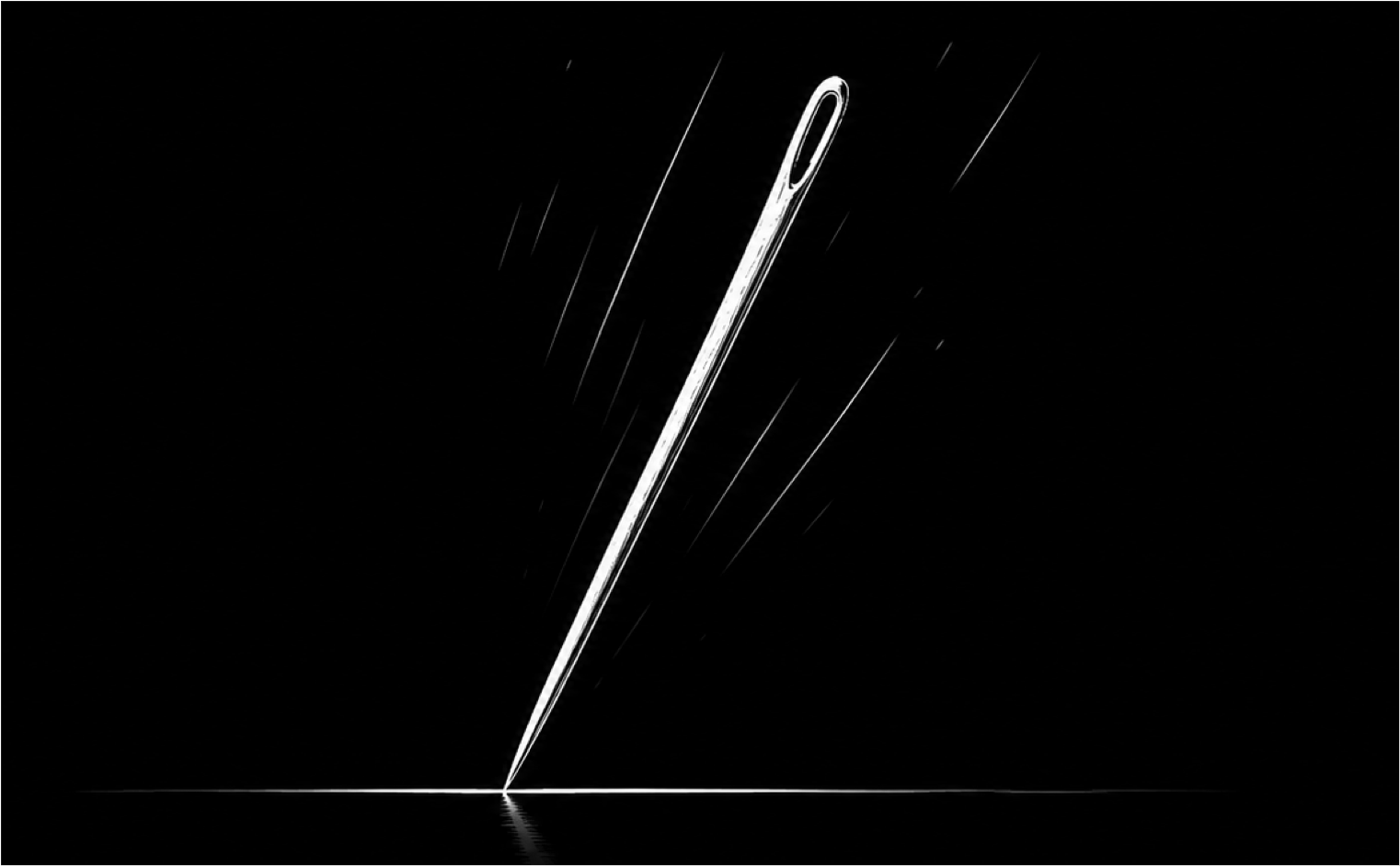
In the mid-to-late 1980s, long distance was still a contested consumer category. AT&T had been the giant. MCI and Sprint had come in as challengers, and Sprint was trying to make a quality argument around its fiber-optic network. By 1987, Sprint was spending heavily on a message built around call clarity: the network was so clear you could hear a pin drop on the other end of the line.
It was a brilliant value proposition because it turned infrastructure into experience. Nobody had to understand fiber optics, switching, routing, or signal quality. The whole technical claim became one simple image: somewhere far away, a pin drops, and the call is clear enough that you hear it.
But the market kept moving. By 1991, MCI had launched Friends & Family, a discount plan built around lower-cost calls to the people customers called most. By the late 1990s, the long-distance category had moved deeper into rate wars, cents-per-minute offers, and bundling. Sprint’s promise did not become false. It became less decisive. Customers still wanted clear calls, but once clear calls became normal enough, clarity stopped doing the strategic work.
A value proposition can become irrelevant without being wrong.
That is the part that matters now.
For a long time, coherent writing had scarcity value. To produce a useful memo, essay, proposal, explanation, lesson, report, speech, or strategy note, a person had to do more than put sentences on a page. The writer had to gather material, make choices, impose order, choose emphasis, anticipate the reader’s questions, and carry the reader from one thought to the next without losing the thread.
That kind of writing was not always art. Much of it was ordinary business competence. But it had value because many people and many organizations could not do it reliably.
AI is now doing to coherence what the telecom market did to long-distance clarity.
It is making the acceptable version cheap.
Give AI notes, a transcript, a vague instruction, a list of facts, or an argument half-formed in someone’s head, and it can usually return something with structure. It will create headings, smooth tone, supply transitions, turn fragments into paragraphs, and produce a draft that can be sent, revised, pasted, posted, or handed to someone else as a starting point.
The early reaction is understandable. People see a machine produce fluent writing in seconds and feel that something important has happened. Something has. The cost of a basic organized draft has collapsed.
But the Sprint story warns us about what happens after the miracle becomes normal.
The first time a tool turns scattered notes into a competent memo, it feels astonishing. The hundredth time, it feels like software. Once polished, organized language becomes available to everyone, the market will stop treating coherence as a premium quality. People will still need it, just as callers still needed clear calls. But needing something and paying a premium for it are different things.
For a huge amount of writing, the market will choose cheap coherence. It will choose the AI-assisted email because it is clear enough. It will choose the generated summary because it is useful enough. It will choose the machine-shaped first draft because it saves the hour, the meeting, the employee, the consultant, the blank page. It will choose the cheaper plan.
This is where the romantic defense of human writing starts to wobble. We like to believe that once people are surrounded by generated prose, they will naturally crave the human voice. Some will, in some contexts. But most written communication is not trying to become literature. It is trying to move a task from one state to another.
An appointment reminder does not need a soul. A basic status update does not need a point of view. A knowledge-base article does not need a childhood memory. A release note does not need to prove that someone suffered beautifully over the verbs.
The old defense of craft fails if it argues from coherence alone. Human writing may be clearer, warmer, more exact, or more alive, but if the job only requires clarity at an acceptable level, the cheaper substitute wins often enough to reorganize the market.
This does not make human craft worthless. It makes it more exposed.
Craft has to justify itself where craft is actually part of what the reader needs. A eulogy cannot be reduced to efficient coherence because the reader is listening for love, grief, memory, and the presence of the person speaking. A serious public argument needs more than structure because someone is asking for trust. Comedy needs taste and danger. A letter to a child cannot merely be well organized. A founder’s explanation of a hard decision has to carry judgment, not just clarity.
In those places, the pin drop still matters.
But now the pin drop means something different. It is no longer the sound that proves the network is clear. It is the small signal that proves someone is actually there.
That signal might be a detail noticed before it was useful, a sentence that carries the cost of a decision, a memory that has not been sanded into a generic lesson, a line of humor that understands the room it is in, or a judgment that could be wrong and therefore belongs to someone. The signal is earned perception, and earned perception is much harder to fake than polish.
This distinction will matter because AI will not stop at polished prose. It will also imitate the signs of humanity. It will become casual when polished starts to feel suspicious. It will add vulnerability when vulnerability performs well. It will produce little confessions, broken rhythms, charming imperfections, and all the other surface cues people begin to associate with real writing. The imitation of authenticity will become one more cheap plan.
So the future premium cannot be mere imperfection. A typo will not save us. Neither will fragments, faux intimacy, or strategic awkwardness. The thing worth preserving is the consequence behind the writing, not the costume of humanity around it.
That is why the Sprint analogy has teeth. The lesson is not that the market eventually returns to the highest-quality signal. Cheap long distance won because the good-enough version satisfied the ordinary need. Pin-drop clarity remained impressive, but it no longer controlled the purchase.
Cheap coherence will do the same to writing.
It will win across the broad administrative layer of life: emails, summaries, internal documents, basic marketing, support content, routine reports, status updates, schoolwork, drafts, descriptions, operating procedures, and a thousand small pieces of language nobody ever loved in the first place. Much of that writing will become better in the practical sense. Faster. Cleaner. Less painful. Easier to produce. More evenly competent.
The loss will not be that every sentence gets worse. The loss is subtler. We may forget which kinds of writing require a person and which kinds merely require output.
That is the mistake to avoid.
Use AI where the job is coherence. Let it organize, compress, summarize, compare, draft, translate, and clean up the ordinary traffic of language. There is no virtue in handcrafting every utility sentence. A person can spend a life polishing long-distance clarity after the market has already moved on.
But when the writing has to carry trust, grief, memory, taste, moral judgment, humor, real persuasion, or lived witness, coherence is only the channel. The value is the thing traveling through it.
Sprint’s pin drop was a lovely promise. The call was so clear that you could hear the smallest sound. The problem was that customers eventually stopped paying for the smallest sound. They wanted the call to work, and they wanted it cheaper.
That is the warning for writers.
The future will not lack clear prose. It will drown in it.
The scarce thing will be writing that had to come from someone.
This piece was written with AI in the room. I used it the way I think it should be used: to test the analogy, challenge the structure, pressure the timeline, surface the business lesson, and help expose the lazy parts. The claim, the judgment, the anxiety, and the final responsibility are mine.
That distinction is going to matter. Not because readers need a purity test, but because the age of cheap coherence will force writers to become clearer about what they are actually contributing. Some of us will use AI to avoid thinking. Some of us will use it to think harder.
The reader will eventually learn to hear the difference.