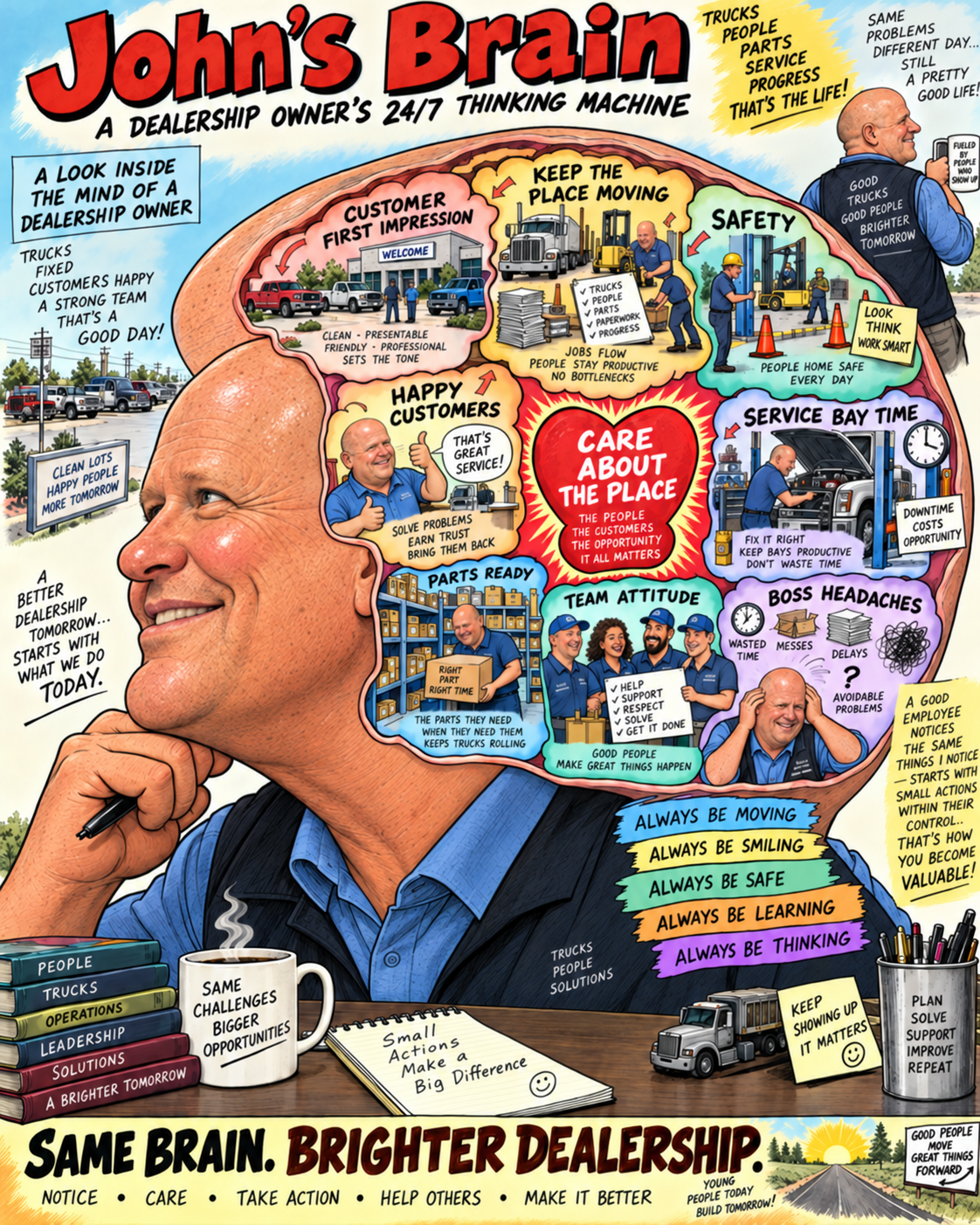
John’s Brain
You're 18, it's your first job, and you're already late. Congratulations. Your boss, John, has been working for 90 minutes and has noticed about 40 things you haven't. This is a problem, especially if you'd eventually like to earn more than gas money.
Fortunately, becoming a valuable employee doesn't require genius, experience, or an MBA. It starts with moving, smiling, staying safe, learning how the business makes money, and occasionally engaging your brain without being asked.
A short field guide to caring about the place, developing business instincts, and understanding why John always looks mildly concerned.
This story takes place at a small truck dealership, but it could be almost any business, anywhere. John owns the place. You're 18, it's your first job, and you know approximately nothing about running a business. That's fine. Nobody expects you to. But there are a few things worth learning sooner rather than later.
You turned left into the parking lot. It's 8:05 AM (you are already late). John has been here since 6:30. You notice an open parking spot. John notices three pieces of trash, a crooked sign, and a truck that's been sitting in the same spot for two weeks. Same parking lot. Different brains.
You walk through the front door looking like somebody just canceled your birthday. Smile. It costs nothing, and customers generally prefer dealing with people who appear to enjoy being alive. Your coworkers do too. Being pleasant is one of the few valuable skills you can bring to work on your first day without any training.
By 9:00, you've finished your first assignment. Nobody has told you what to do next. Congratulations, you've arrived at the moment that separates employees who become valuable from employees who spend their careers waiting for instructions.
Look around. What needs doing? What would make a customer's visit better? What's making somebody else's job harder? Start with things you can actually control. Pick up the trash. Straighten the waiting area. Help somebody carry something. You don't need permission to do every little useful thing, although you're probably not yet qualified to reorganize the parts department. Resist the temptation.
Here's a simple way to handle the things you notice:
Do it yourself. Ask first. Tell someone.
Some things are clearly safe and within your authority. Take care of them. Other things require permission or a little guidance. Ask. And when you notice something unsafe, broken, or potentially expensive, make sure the right person knows. Figuring out which response makes sense is called judgment. You'll get better at it.
At 10:30, a mechanic is waiting for a part. He's getting paid, the service bay isn't producing revenue, and the customer wants his truck back. You probably can't solve that problem today. But you've just learned something important about how the dealership makes money. The mechanic's time matters. The parts department matters. Getting the right things to the right people at the right time matters. Start noticing these connections.
By lunch, you've probably discovered that John gets excited about happy customers, finished jobs, and people who figure things out. He's considerably less excited about wasted time, avoidable mistakes, and employees standing around waiting to be entertained. Pay attention to what makes John happy and what gives him headaches. His reactions are a pretty good introduction to the economics of the business.
At 2:00, you're moving something through the shop. Look where you're going. Wear the required safety gear. Don't get creative around heavy machinery. John would prefer that everyone go home with the same number of fingers they arrived with. Safety matters just as much as speed, and sometimes considerably more.
By 3:00, you're beginning to understand that always be moving doesn't mean running around looking busy. It means finding useful things to do. Always be learning means paying attention to how the place works. Always be thinking means using what you've learned to anticipate what might need doing next. Smiling and working safely belong in that same routine. None of these habits requires much experience, but together they make an enormous difference.
At 4:30, you're ready to leave. Before you go, look around one more time. Is there something small you can finish? Something somebody needs to know? Something you learned today that you didn't know yesterday?
Here's the secret. John cares about the place. The trucks, the customers, the employees, the money, the messes, the little problems that become expensive problems. All of it. He has years of experience and plenty of reasons to care. You're just getting started, but you can begin developing the same instincts.
You don't have to think like John yet. Just begin noticing what John notices, particularly the things you can do something about. As you learn more and earn trust, you'll be able to take on more. That's how people become genuinely valuable, often long before they have an impressive job title.
Always be moving. Always be smiling. Always be safe. Always be learning. Always be thinking.
And tomorrow, try arriving at 7:55.
Written with help from AI, which has never worked a day in a truck dealership but has plenty of opinions about how one should behave.