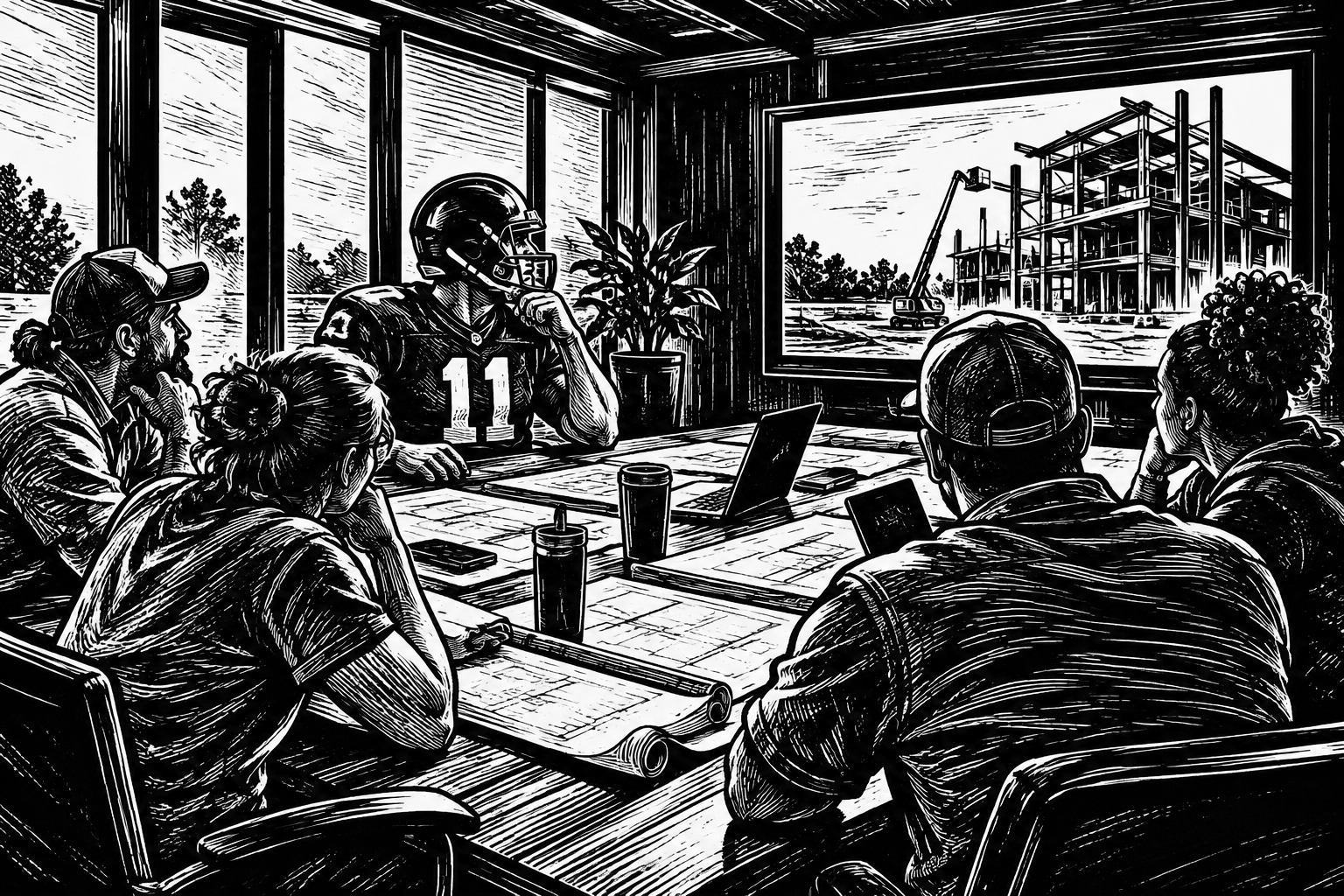
In 2017, the Philadelphia Eagles lost their starting quarterback, Carson Wentz, to a season-ending injury. Two months later, his backup, Nick Foles, was named Super Bowl MVP.
That's a remarkable story, but I'm more interested in what made it possible. The Eagles had a capable replacement, coaches who could adapt, and an organization prepared to compete under different circumstances.
Now consider a typical 50-person business.
There's one person who really understands the financials. Another who knows how to keep operations running. A salesperson who maintains the most important customer relationships. Perhaps one employee who understands the software everyone else relies on.
And then there's the owner.
The quarterback.
The owner calls the plays, makes the difficult decisions, handles emergencies, and steps in whenever something goes wrong. They're often the company's best salesperson, most experienced negotiator, and ultimate source of institutional knowledge.
They've spent years becoming indispensable.
And therein lies the paradox.
The more indispensable you become to your business, the less valuable your business may become to someone else.
You've spent 20 years building a company. You've developed relationships, solved thousands of problems, survived recessions, hired and fired employees, and accumulated knowledge that nobody else possesses. You're proud of how much the company depends on you.
Then one day, a prospective buyer arrives.
You see a successful business that reflects decades of hard work.
The buyer sees a business whose starting quarterback is about to collect a very large check and head for the locker room.
And the quarterback might not be the only one leaving.
Your general manager, top salesperson, or longtime operations director may also be approaching retirement, expecting a payday, or deciding that a change in ownership is a good time to make a change of their own.
While you're explaining how the company operates today, the buyer is imagining how it will operate eighteen months after the acquisition.
Who's going to manage the customers? Who understands the finances? Who makes the decisions? Who knows how to solve the problems that nobody bothered to document?
You've spent years proving how indispensable you are. The buyer wants proof that you aren't.
An NFL team doesn't stop developing quarterbacks because it has a great starter. It doesn't neglect scouting because its current roster is winning. The best organizations are constantly evaluating their talent, identifying future needs, and preparing people for greater responsibility.
They build the bench.
And building the bench involves more than finding someone who can stand in the same position.
A backup quarterback needs practice, preparation, confidence, familiarity with the system, and coaches willing to trust him when the moment arrives.
The same is true in business.
You might have someone who could become a terrific operations manager. But have you allowed that person to make important decisions? Have they dealt with difficult customers? Do they understand the financial consequences of their choices? Have they ever been permitted to fail without you immediately taking over?
Or have you spent years demonstrating that nobody can do the job quite as well as you?
There's a particularly insidious problem here. Every time an owner swoops in to save the day, the business gets through another crisis. The customer is happy. The employee is relieved. The owner feels useful.
And the organization becomes a little more comfortable depending on its quarterback.
The next generation never gets enough playing time.
Building the bench requires a different kind of discipline. It means recruiting people before you're desperate, developing talent before a position opens, sharing knowledge you'd rather keep in your head, and allowing other people to make decisions you could probably make faster yourself.
Some of this costs money. Much of it costs patience. And almost all of it requires the owner to surrender a little control.
But consider what you're buying.
A business that can handle an unexpected departure. A management team capable of responding to problems without calling you. Employees who can assume larger responsibilities as the company grows. An organization that becomes stronger without requiring you to work harder.
And eventually, perhaps, a business someone else wants to buy.
The irony is that many owners obsess over revenue growth, profit margins, and efficiency while paying remarkably little attention to the organizational fragility that could undermine all three.
Some small businesses struggle to make the playoffs. Others enjoy profitable, satisfying seasons for decades. A few reach their version of the Super Bowl.
But if your ambition includes building a durable company that can thrive without you, perhaps even one that rewards you with a grand exit, the quality of your bench deserves as much attention as the quality of your starting lineup.
Someday, someone may offer to buy your business. They'll admire what you've accomplished, examine your financial statements, and meet your key employees.
But they'll also be thinking about something you may have overlooked.
They know who's getting the payday.
And they're wondering who's going to show up for practice afterward.
You've spent years becoming a better quarterback.
Build your backup.
AI disclosure: I developed the ideas, observations, and direction of this essay through conversations with ChatGPT, which assisted with drafting and editing. The opinions and conclusions are my own.