The Load-Bearing Life
There are some people who rarely get sick.
They are not invincible. They are not living in a bubble. They move through the same world, breathe the same air, pass through the same season, and somehow their bodies keep holding the line. We usually file that difference under luck, genetics, or a good immune system. Some of it belongs there. But not all of it.
Part of the difference, I think, is that some people are living under better operating conditions.
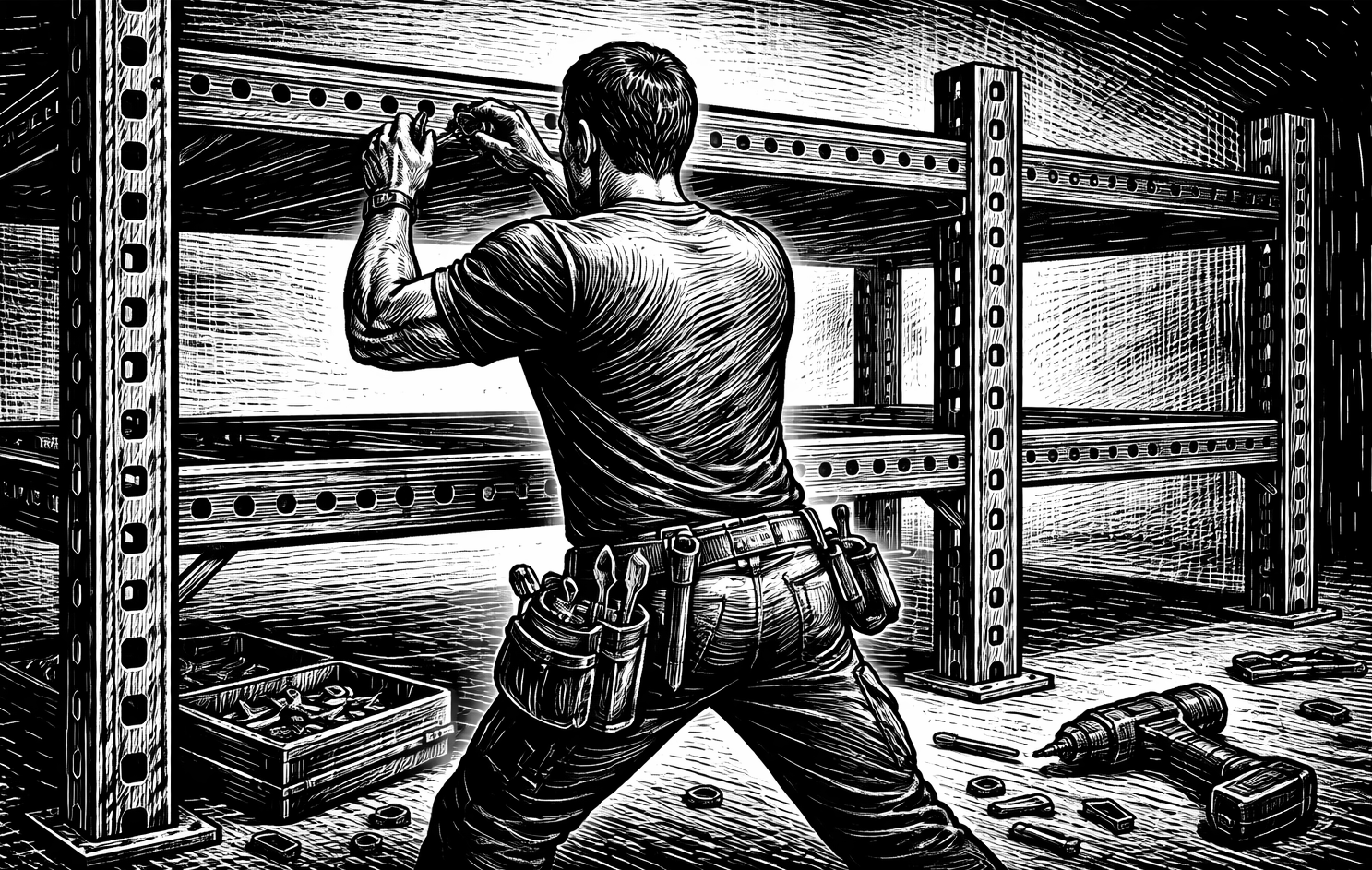
The human body is a load-bearing system. It was built to carry, lift, push, pull, climb, brace, walk, and absorb recurring physical demand as part of ordinary life. Not as a hobby. Not as a scheduled burst. As a condition of living. A load-bearing life is a life whose structure keeps the body in regular contact with weight, resistance, motion, and useful work.
For most of human history, nobody had to think much about this. Life handled it. Water had to be carried. Wood had to be moved. Children had to be lifted. Distances had to be walked. Tools had to be hauled. Things had to be built, fixed, dragged, pushed, and held. Low-to-medium physical demand was not a training philosophy. It was just life. And because it was just life, the body stayed in conversation with reality.
Then we built a world that removed load from nearly everything.
We sit to work. We drive to move. We click to buy. We tap to summon food. We avoid stairs. We outsource lifting. We engineer inconveniences out of daily life and call the result progress. On many fronts it is progress. But it has also created a serious distortion in how the average body now lives.
We have built lives that chronically underload the human body.
That is the phrase that matters. Chronic underloading. Not one lazy afternoon. Not one missed workout. A whole pattern of living in which the body is almost never asked to do what it was built to do. A whole way of life in which comfort becomes the default and physical demand gets pushed to the margins.
A body living under those conditions does not stay neutral. It softens. It loses reserve. Its fuel handling gets worse. Small efforts start to feel larger than they should. Strength becomes optional, then rare. The body still works, but it works in worse condition. It becomes easier to drain, easier to inflame, easier to wear down.
This is one reason I think modern people misunderstand health.
We take a population that survives longer, has better emergency care, better medicine, better sanitation, and better rescue from infection and trauma, and we let all of that harden into one flattering conclusion: we must therefore be healthier in every meaningful sense. That does not follow. A person can survive longer and still be running in worse condition. A society can get much better at saving life while getting worse at producing strong baseline adults.
And because averages flatten everything, we miss the distinction. We confuse survival with condition. We confuse comfort with vitality. We confuse preservation with strength.
Meanwhile, the body keeps score.
Usually not with one dramatic event at first. More often with something quieter. Lower reserve. Worse recovery. Flimsier energy. Poorer metabolic handling. Less resilience. Less capacity for ordinary physical life. Then we call it normal. We call it adulthood, aging, stress, bad sleep, or being busy. Sometimes it is those things. But sometimes the deeper truth is simpler. The body is living under bad operating conditions.
If you are young, this matters more than you think.
One of the most important health decisions you will ever make may not look like a health decision at all. It may look like a job offer. It may look like a career path. It may look like a respectable adult life in a climate-controlled building where your body is chained to a chair for eight hours a day and your mind is told to call that normal.
Be careful with that trade.
I am not saying every desk job is a mistake. I am saying a desk-bound life is not biologically neutral. Most people do not chain their body to a chair all day, five days a week, year after year, and then successfully erase the damage with good intentions and occasional workouts. They imagine they will make up for it later. Most do not.
Life gets there first.
The chair is not just a chair. It is an ecosystem. It changes your day, your habits, your thresholds, your posture, your fatigue, your expectations, and your definition of effort. Once the structure of your week is built around sitting, driving, ordering, scrolling, and managing symbols, restoring enough physical demand to stay fully alive becomes an uphill fight. You are no longer deciding whether to exercise. You are asking your willpower to overcome the architecture of your life over and over again.
That is a bad plan.
The better plan is to build a load-bearing life.
Not a life where physical effort is an afterthought. A life where load is built into the structure. A life that keeps the body in regular contact with weight, resistance, motion, and useful work. Not as a hobby. As a condition of living.
Do not casually trade away movement, load, and physical participation for status, comfort, and climate control, then assume you will bolt vitality back on later. For most people, later never really comes. It gets eaten by fatigue, convenience, distraction, and the quiet force of routines that no longer require anything from the body.
A load-bearing life is not old-fashioned punishment. It is a better operating environment for a human being.
I think many people are not mainly getting old.
They are being chronically underloaded.
And one of the great confusions of modern life is that we have learned to mistake a low-friction life for a good one. It may be productive. It may be comfortable. It may even be long.
But that does not make it strong.
The question is not whether your life includes exercise.
The question is whether your life is load-bearing.
Because if it is not, the softness, the sluggishness, the reduced reserve, the worse fuel handling, the lower resilience, and the slow drift toward fragility are not some mystery.
That is the fragile future you are building.
Research
We have confused survival with condition.
Modern life is a miracle of rescue. We defeat more infections, survive more trauma, and save more infants than any generation in history. But survival is a low bar. It is possible to live a long time in a body that is running in worse condition. We are surviving longer while carrying a heavier burden of metabolic dysfunction and lower baseline physical capacity than many people realize. Life expectancy rose not only because fewer children died, but because survival improved at older ages as well. See Our World in Data:
https://ourworldindata.org/its-not-just-about-child-mortality-life-expectancy-improved-at-all-ageshttps://ourworldindata.org/life-expectancy
The drag has been engineered out.
This was not a moral collapse. It was an environmental shift. Between 1960 and 2008, the daily physical demand of the American workday dropped sharply. A widely cited analysis found that occupation-related energy expenditure fell by more than 100 calories per day for both men and women. We did not merely get lazier. The structure of life got quieter.
https://pubmed.ncbi.nlm.nih.gov/21647427/
The body is keeping a grim score.
In 1958, diagnosed diabetes prevalence in the United States was 0.93%. By 2014, it had climbed to 7.02%. During August 2021 through August 2023, adult obesity prevalence was 40.3%. These are not just medical statistics. They are the visible metabolic consequences of a load-bearing organism living in a friction-reduced world.
https://stacks.cdc.gov/view/cdc/42550/cdc_42550_DS1.pdfhttps://www.cdc.gov/nchs/products/databriefs/db508.htm
Fragility is the new baseline
In 2020, only 24.2% of U.S. adults met both aerobic and muscle-strengthening guidelines. Meanwhile, 46.3% met neither. Physical demand is no longer built into ordinary life for much of the population. It has been pushed to the margins and recast as a specialized activity rather than a normal operating condition.
https://www.cdc.gov/nchs/products/databriefs/db443.htm
Muscle is more than meat.
A working muscle is a regulatory engine. It is involved in glucose disposal, insulin sensitivity, body composition, vascular function, and inflammatory tone. When muscular demand disappears, the system does not simply become less athletic. It becomes less well regulated.
https://www.cdc.gov/nchs/products/databriefs/db443.htmhttps://www.cdc.gov/nchs/products/databriefs/db508.htm
Inactivity is a biological error.
A structurally sedentary life is not a neutral lifestyle choice. It is the wrong operating environment for a load-bearing organism. The research is consistent on the main point: regular moderate physical activity supports immune regulation and lowers infectious-disease risk, while chronic inactivity degrades the system that is supposed to hold the line.
https://pubmed.ncbi.nlm.nih.gov/32139352/https://pubmed.ncbi.nlm.nih.gov/26477922/